





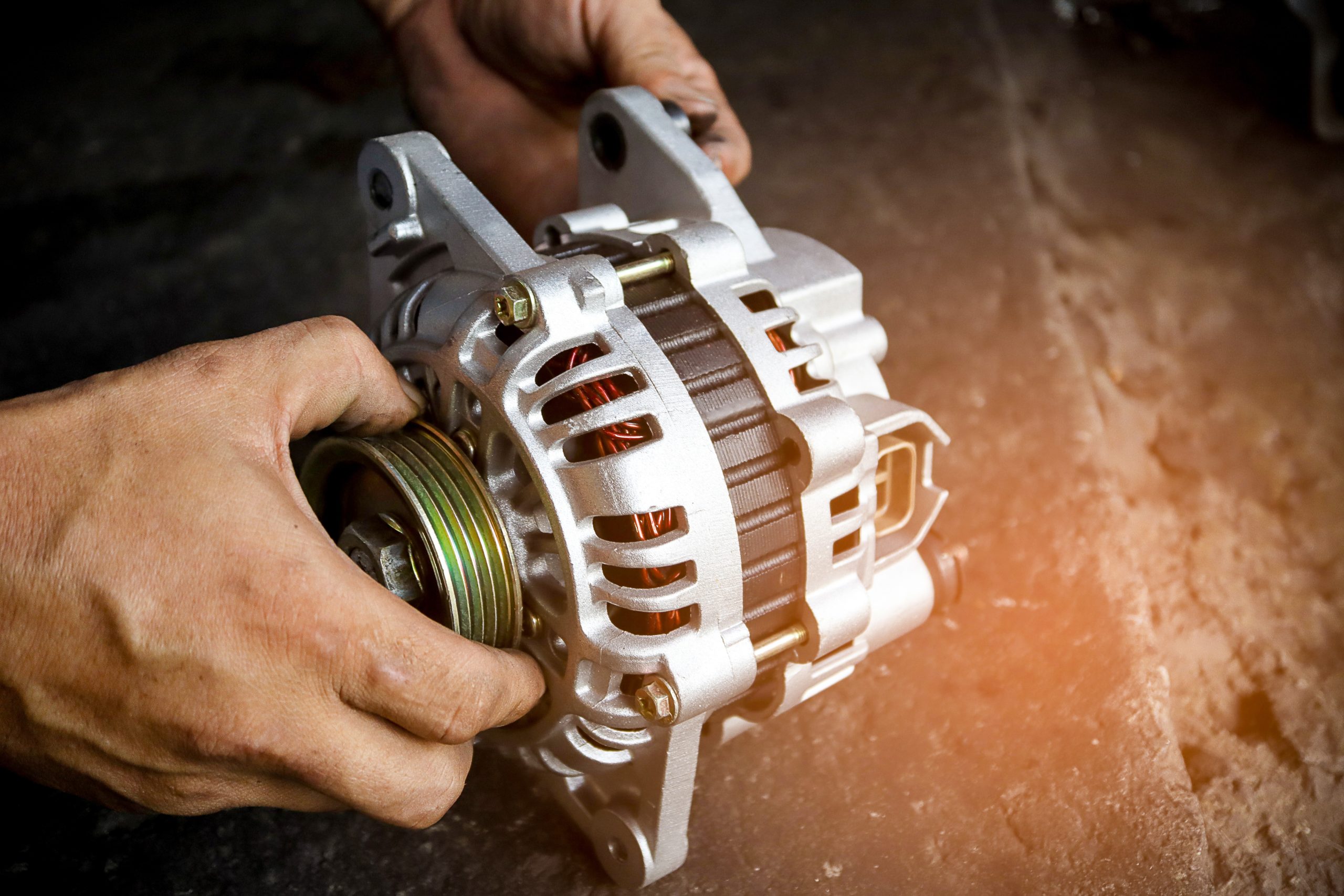
The alternator’s job is to supply electricity for all your car’s systems and devices. It’s connected to the crankshaft by the alternator belt and it produces electricity by spinning at high speed. If your alternator becomes worn or damaged, your Chevy dealer can fix the problem. These are a few signs that you need an alternator repair.
Damaged Belt Tensioner
The alternator belt is a car belt that connects the crankshaft to a series of pulleys. When the crankshaft turns, the belt moves at high speed across these pulleys. The belt’s movement causes the pulleys to spin, and the spinning action powers the alternator, AC compressor, and other vital engine systems.
The belt is maintained at a constant tension by the belt tensioner. If the alternator belt is too tight, it could snap, and if it is too loose, it could slip out of its compartment. In either situation, the alternator will shut down, and your car will lose its electricity supply. Screeching noises and an illuminated check battery light are two signs of a potential belt problem. We’ll examine the tensioner and adjust or replace it depending on the situation.
Check Battery Light
Your car contains numerous sensors that monitor its most important components. These sensors are sensitive enough to detect minute changes in the components they’re attached to. If a problem is detected, the relevant sensor will inform your computer and a warning light will illuminate. Any problem with the alternator will cause the check battery light to illuminate.
An alternator problem can develop over time as the alternator wears out. Generally, an alternator will work effectively for at least eight years. As it ages, the alternator slows down, which reduces the amount of electricity it can supply. If the output from the alternator drops below 12.5 volts, your alternator is probably failing. Our technicians will test the alternator to confirm the problem, and we can quickly install a new one.
Bad Battery
The alternator is responsible for recharging your battery. When you hit the start button, the battery supplies the electrical charge that initiates the engine engine crank that starts the engine. When your engine starts, the alternator begins recharging your battery at full power. After ten minutes, the alternator switches to recharging at 10% of battery capacity to prevent damage to the alternator and the battery.
The reduced charging rate starts as soon as the alternator receives a signal from the battery that the initial charge has been received. If your battery is going bad, it may not send this signal. In this situation, the alternator will continue to try and recharge the battery at full power, and this will lead to damage. We’ll replace the damaged battery and may need to replace the alternator if it’s damaged.
Alternator problems are easy to repair. Call us today at Minnesota Motor Company.
Connect with us


Recent Blog Entries
- Chevy Silverado 1500 vs Colorado: Choosing the Right Truck for West-Central Minnesota
- Best Chevrolet SUVs for Minnesota Winters: What Fergus Falls Drivers Should Know
- 2026 Chevy Traverse Fergus Falls MN: Room to Roam Around Fergus Falls
- 2026 Chevy Equinox Fergus Falls MN: Everyday Versatility You’ll Love
- Best Chevrolet SUVs for Minnesota Families in Fergus Falls, MN